

In my book Red Paper 2022 Volume 1 "Felids" I looked at feral cats and the following information from the Cats Protection https://www.cats.org.uk/cats-blog/why-do-some-cats-have-ear-tip-missing may be useful.
I ought to point out that I have observed cats with missing ear tips -lost through fighting. The longest it took me to get a feral cat to "trust" me (I still got scratched once!) was around 15 months. On local cat Face Book pages I have read people "worried" that a cat passed through their garden, was sat on their wall or walking in fields near houses -where they lost? No, they were doing what cats do, especially un-neutered toms, and that is walk their territory or "go looking for a girlfriend".
One cat that liked to wander and had a couple "girlfriends" wandered off for a couple of days at a time. His owner was making a fuss of him one day when a neighbour noted that now he had "been done" he might not go wandering so much. The owner literally hit the roof. Someone had trapped and neutered her cat the released it back into the area. The cat was well known locally so who did this is unknown -a vet would only do this for the owner and I was told by one person that it was trapped and neutered by Cat Protection. When I enquired Cat Protection refused to discuss the matter.
Cats wander about and have their own territories so seeing them out and about is common. People need to learn more about cats. A case in point were a couple who kept their cat indoors until he was old enough and they went into panic mode when the cat had not returned by 2200hrs -"He's never out after 10!" They went out and searched and found the cat on a tree branch -"Someone must have put him up there!" 😕
Also worth noting is that some pet cats really hate being indoors and do prefer to live outdoors going into a shed in bad weather. Cats decide what they want and do not humans.
Cats Protection
Have not had their ear 'tipped', even if neutered
Appear near houses. They're most likely to be found in people's gardens and trying to get into their home
Have appeared recently. They also might look lost or disorientated
Feral cat
Feral cats are the same species of cat as our pet cats, but are not socialised to humans or the domestic environment. This means they behave like wild animals.
Feral cats
Not friendly. Unsocialised to humans, feral cats find people threatening and can be hard to spot. They won't come close, even with encouragement
Live alone or with others. Sometimes, they might live in a colony with other feral cats
May have their ear 'tipped'. The tip of one of one their ears may be missing to show they have been neutered
Appear away from houses. They'll avoid human contact and often have a hiding spot away from populated areas
Won't be microchipped. Most feral cats don't have a microchip
More likely to be settled. Feral cats are more likely to have set up a permanent home or shelter
What makes a cat feral?
Cats learn what is normal at a very young age, during what is known as a 'socialisation period.' Between the ages of two to six weeks, kittens can learn to enjoy human contact, forming a bond and becoming great pets.
Feral cats are usually the offspring of stray, feral or abandoned cats and have missed out on this early experience, making them likely to be wary of humans.
A missing ear tip is a sign of a neutered feral cat
Have you ever spotted a cat with the tip of one of their ears missing? You might have assumed they’ve been involved in a fight or had an accident. But it’s more likely that the ear tip has been removed in a common procedure called ear-tipping or ear-notching. This is a humane way of signifying that a feral cat has been neutered.
Why are feral cats ear-tipped?
Feral cats are cats who are not used to being around humans. They cannot be kept as domestic pets. They prefer to live outdoors on their own, or in colonies with other feral cats. They can be thought of as wild animals.
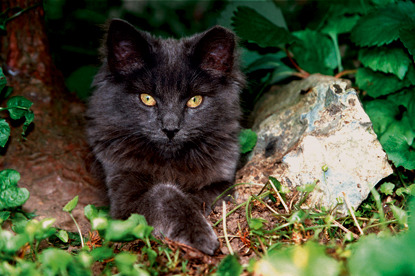
As cats are prolific breeders, the number of feral cats in the UK can quickly get out of control. Animal welfare organisations such as Cats Protection carry out trap, neuter and return programmes. As the name suggests, this involves:
- humanely trapping feral cats
- getting them neutered by a vet
- returning them to their familiar territory where they feel safe
This helps to control feral cat numbers. It also helps to keep the cats healthy as it stops them from spreading infectious diseases through mating and fighting.
Trapping a feral cat for neutering can be quite a difficult and time-consuming process. Feral cats are typically afraid of humans and don’t like being confined in small spaces. It can take a lot of time and effort to entice them into a trap, and be very stressful for the cat too. To make sure that an already neutered feral cat is not unnecessarily trapped again for neutering, their ear tip is removed while under anaesthetic. This is an internationally-recognised sign that they have been neutered.
Is ear-tipping painful for the cat?
The tip of the cat’s ear is surgically removed while they are under anaesthesia for their neutering operation. They don’t feel a thing. 10mm of the tip of the left ear, or slightly less in kittens, is all that’s removed. Once the cat is awake, the ear heals very quickly with no lasting effect on the cat’s welfare. They probably won’t even notice it’s happened! Meanwhile, they’ll live a much happier and healthier life and they won’t need to be trapped again for neutering.
Why don’t you microchip the cat to signify they have been neutered?
It might seem a much simpler and less invasive solution to microchip the cat once they have been neutered. The microchip could then signify that they have been neutered. But there’s one major problem with this. Getting close enough to a feral cat to scan them with a microchip scanner is not easy. They will likely run away. This means they would need to be trapped to scan them, which would cause them a great deal of stress. It’s much better for the cat if they can be identified as being neutered from a distance. Ear-tipping is the ideal solution.
What should I do if I spot a feral cat without their ear tipped?
If you think you’ve spotted a feral cat without a missing left ear tip, get in touch with Cats Protection. We may be able to trap them and neuter them, then return them to their original territory. You can get in touch by calling 03000 12 12 12 or emailing info@cats.org.uk


No comments:
Post a Comment